Goal examples · For teams

Performance goals examples people can actually own

These performance goals examples are written for the review conversation most small teams dread. A performance goal works when the person can see their own progress every week, not just when the manager writes it up at the end of the year.

Each one has a number, a date and a first step, and each is a SMART goal. Pick one, change the numbers to fit the role and agree it together. Or shape your own with the SMART goal generator.

Show

Results goals

Results goals are about the output of the job. Keep them to things the person can actually move, not numbers that depend on the whole business.

4 examples

Quality goals

Quality goals are about doing the work better, not more of it. They need a measure everyone agrees on before you start.

4 examples

Customer goals

Customer goals connect the work to the people who pay for it. Keep the measure simple enough to check each week.

4 examples

Working together goals

Some of the most useful performance goals are about how a person works with the team. They still need a number, or they turn into "be a better team player".

4 examples

Manager goals

Managers need performance goals too, and the best ones are about how well the team is supported.

4 examples

How to make them your own

Agree it, don't hand it out.

People work harder on goals they helped write. Bring three examples and choose one together.

In their control.

A performance goal should depend on the person's work, not on the market or another team.

A number and a date.

Without them, the review turns into opinions about how it went.

Two or three at a time.

More than that and none of them get real attention.

A step this week.

Every goal above ends with a first step. Agree the first one before the meeting ends.

Check progress weekly.

A short weekly check-in means the annual review holds no surprises. See Twelve check-in questions that get real answers.

Questions people ask

What is a performance goal?

A performance goal is a result a person agrees to reach in their role, by a date, measured in a way you both agree on. It is the basis for the review conversation, so it should be clear enough that you'd both give the same answer about whether it was met.

How many performance goals should an employee have?

Two or three at a time. One results goal, one quality or customer goal and one about how they work with others is a good mix.

How do you write a performance goal?

Start with what success looks like in the role, then add a number and a date. Ask whether the person controls it, and agree the first step together. How to write SMART goals has five questions that help.

How often should performance goals be reviewed?

Check progress briefly each week, talk it through properly in one-on-ones, and change goals each quarter or half. The yearly review should only confirm what you both already know.

What if a goal stops making sense halfway through?

Change it. A goal that no longer fits the job wastes effort. Note why it changed so the review is fair.
In Lifetick

In Lifetick, each person writes their own goals, breaks them into tasks with dates and reminders, and links them to your core values. They choose which goals you see.

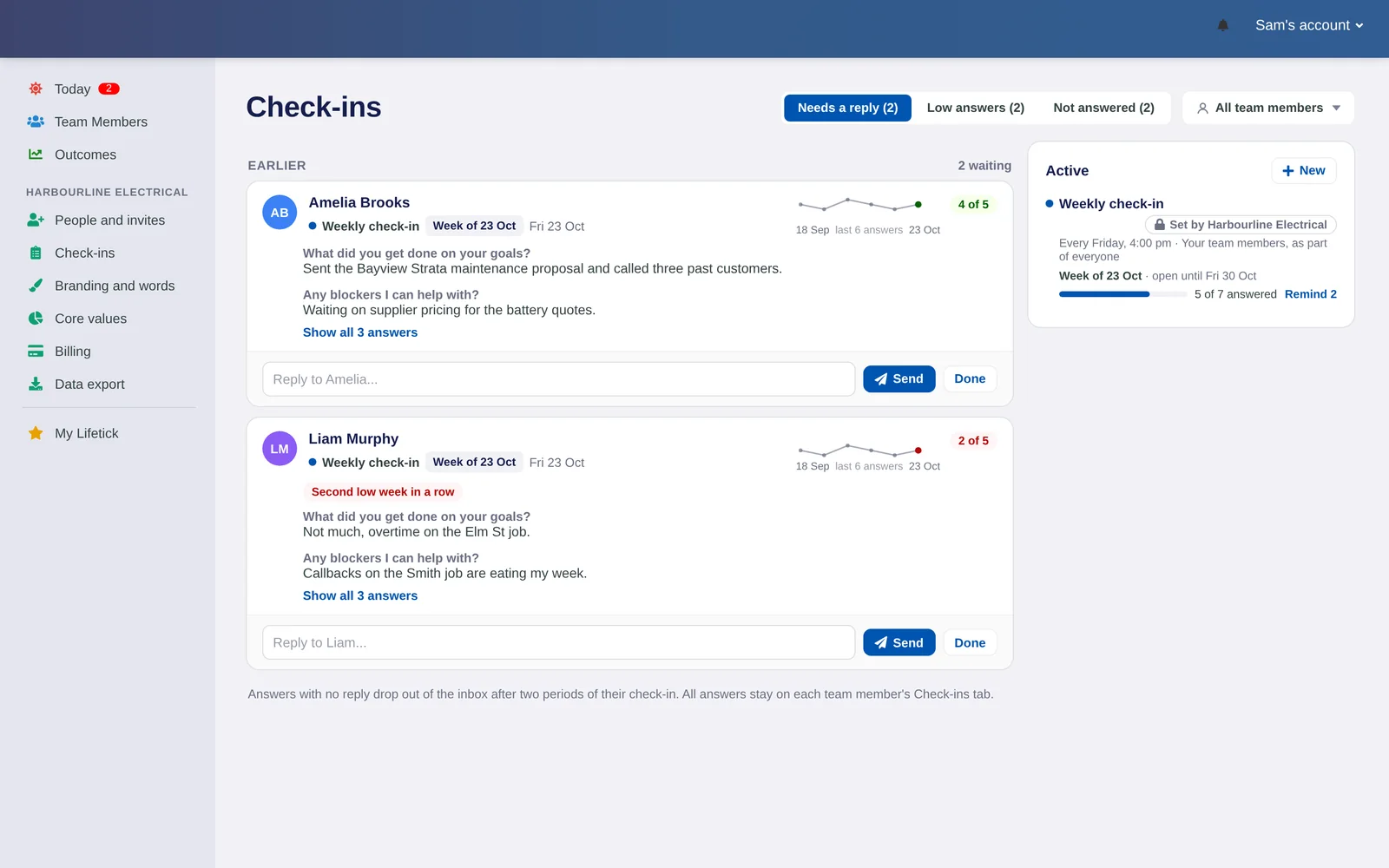
A weekly check-in asks what got done on goals and what got in the way, and the answers sit beside each person's goals. You reply in the app, and by review time you have weeks of notes to look back on instead of a blank page. See Send your first check-in and Read and reply to answers.

For how check-ins work across a team, see employee check-ins and goal setting software for small teams.

Weekly check-in answers waiting for a reply, next to each person's goals

Give your team one goal this week.

Each person writes their goal, links it to a value and gets a weekly check-in. Free for 14 days, no card needed.